



CERES (Centers of Excellence for Resilient Entrepreneurship and Sustainable Solutions) is a 36-month transnational cooperation project aimed at strengthening the resilience, competitiveness, and innovation capacity of micro, small and medium-sized enterprises (MSMEs) across the Mediterranean.
With a total budget of €2,497,800, the project is co-funded at 89% by the European Union (€2,223,042) under the Interreg NEXT MED Programme. The project establishes three Centers of Excellence (CoEs) in Greece, Palestine and Lebanon, which will serve as regional hubs for advanced training, entrepreneurship support, digital-green capacity building, and collaboration among local actors.
Many Mediterranean regions experience frequent energy disruptions, weak infrastructure, and difficulties in maintaining essential services. This limits the competitiveness of MSMEs, which often lack the technical skills required to adopt modern, digitalised renewable technologies.
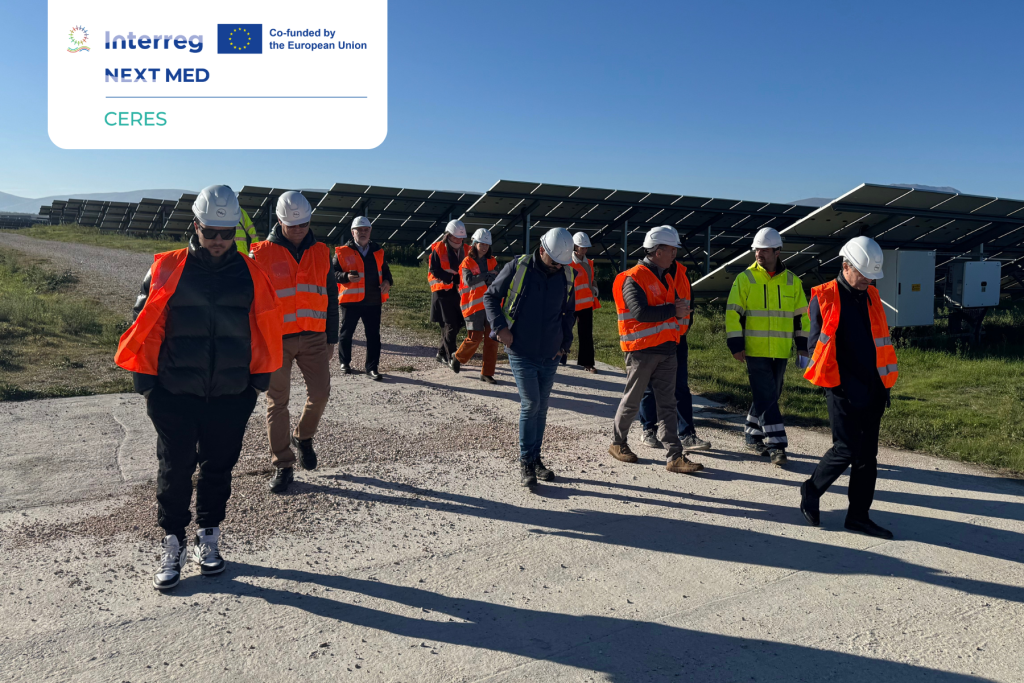
CERES addresses this challenge by creating a collaborative ecosystem where MSMEs, students, professionals, and local actors can access specialised training, solar technologies, digital tools, mentoring, and real-life demonstrations of resilient energy solutions.
10 pilot projects implemented with open-source digital supervision systems:
Greece: 3 solar shadow stations for e-mobility charging, lighting and energy supply.
Lebanon: 5 solar stations for potable water, ice storage, aesthetic kiosks and public lighting.
Palestine: 2 photovoltaic installations for electric vehicle charging and wastewater treatment linked to agriculture and MSMEs.
Strengthening cooperation among MSMEs, researchers, universities and local authorities.
Creation of energy clusters in Greece and Palestine to ensure post-project sustainability.
Increased opportunities for employment, entrepreneurship and innovation in green sectors.
MSMEs in the energy sector and energy-dependent sectors.
Students, graduates and young technical professionals.
Local authorities, energy communities, chambers of commerce and technical associations.
Entrepreneurs and start-ups in the green and digital fields.
Training institutions, universities and research centres.
MSMEs that will gain access to low-cost solar solutions and replicable business models.
Students and professionals who will receive specialised training and access to learning platforms.
Local ecosystems that will benefit from greater energy resilience and strengthened digital capacities.
This webpage has been produced with the financial assistance of the European Union under the Interreg NEXT MED Programme. The content of this page is the sole responsibility of SOLARTYS and can under no circumstances be regarded as reflecting the position of the European Union or the Programme management structures.
Suscríbete a nuestra newsletter
| Cookie | Duration | Description |
|---|---|---|
| cookielawinfo-checkbox-analitica | 1 year | CookieYes set this cookie to store the user consent for the cookies in the category "Analytics". |
| cookielawinfo-checkbox-analytics | 11 months | This cookie is set by GDPR Cookie Consent plugin. The cookie is used to store the user consent for the cookies in the category "Analytics". |
| cookielawinfo-checkbox-anuncio | 1 year | CookieYes sets this cookie to store the user consent for the cookies in the category "Advertisement". |
| cookielawinfo-checkbox-funcional | 1 year | CookieYes set this cookie to record the user consent for the cookies in the category "Functional". |
| cookielawinfo-checkbox-necesaria | 1 year | Set by the GDPR Cookie Consent plugin to store the user consent for cookies in the category "Necessary". |
| cookielawinfo-checkbox-others | 11 months | This cookie is set by GDPR Cookie Consent plugin. The cookie is used to store the user consent for the cookies in the category "Other. |
| cookielawinfo-checkbox-performance | 11 months | This cookie is set by GDPR Cookie Consent plugin. The cookie is used to store the user consent for the cookies in the category "Performance". |
| cookielawinfo-checkbox-rendimiento | 1 year | Set by the GDPR Cookie Consent plugin to record the user consent for the cookies in the "Performance" category . |
| CookieLawInfoConsent | 1 year | CookieYes sets this cookie to record the default button state of the corresponding category and the status of CCPA. It works only in coordination with the primary cookie. |
| csrftoken | 1 year | This cookie is associated with Django web development platform for python. Used to help protect the website against Cross-Site Request Forgery attacks |
| elementor | never | The website's WordPress theme uses this cookie. It allows the website owner to implement or change the website's content in real-time. |
| Cookie | Duration | Description |
|---|---|---|
| wp-wpml_current_language | session | WordPress multilingual plugin sets this cookie to store the current language/language settings. |
| Cookie | Duration | Description |
|---|---|---|
| yt-remote-connected-devices | never | YouTube sets this cookie to store the user's video preferences using embedded YouTube videos. |
| yt-remote-device-id | never | YouTube sets this cookie to store the user's video preferences using embedded YouTube videos. |
| Cookie | Duration | Description |
|---|---|---|
| 10wexa1t | 5 days 1 minute | Description is currently not available. |
| cookielawinfo-checkbox-otras | 1 year | Description is currently not available. |
| iuks6ukk | 5 days 1 minute | Description is currently not available. |
| jf89b88v | 5 days 1 minute | Description is currently not available. |
| m | 1 year 1 month 4 days | No description available. |
| w4r35gvg | 5 days 1 minute | Description is currently not available. |
